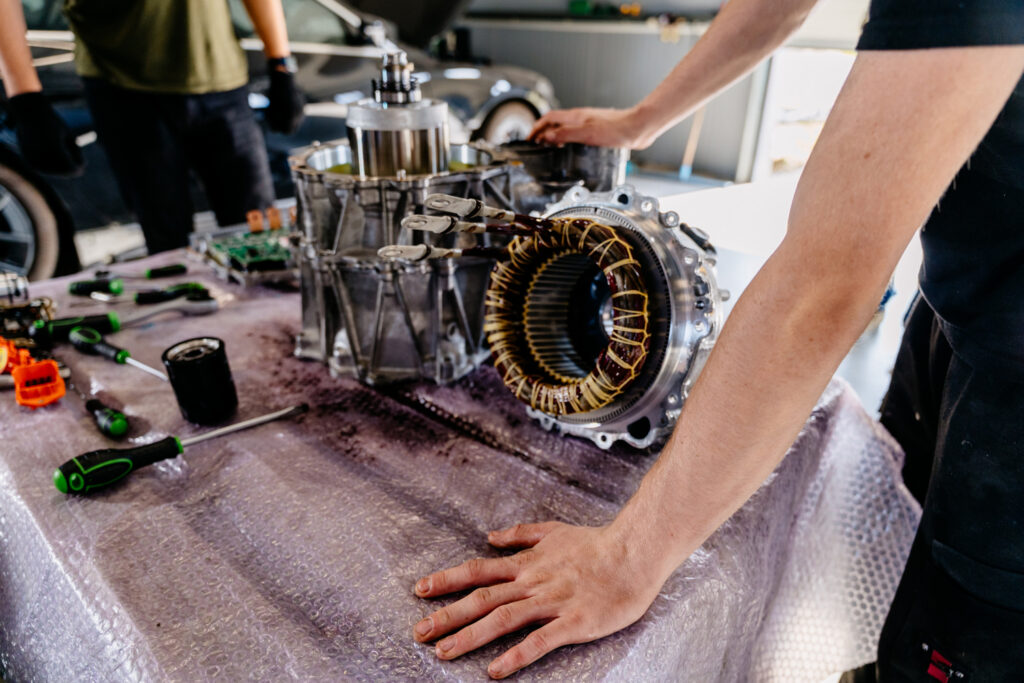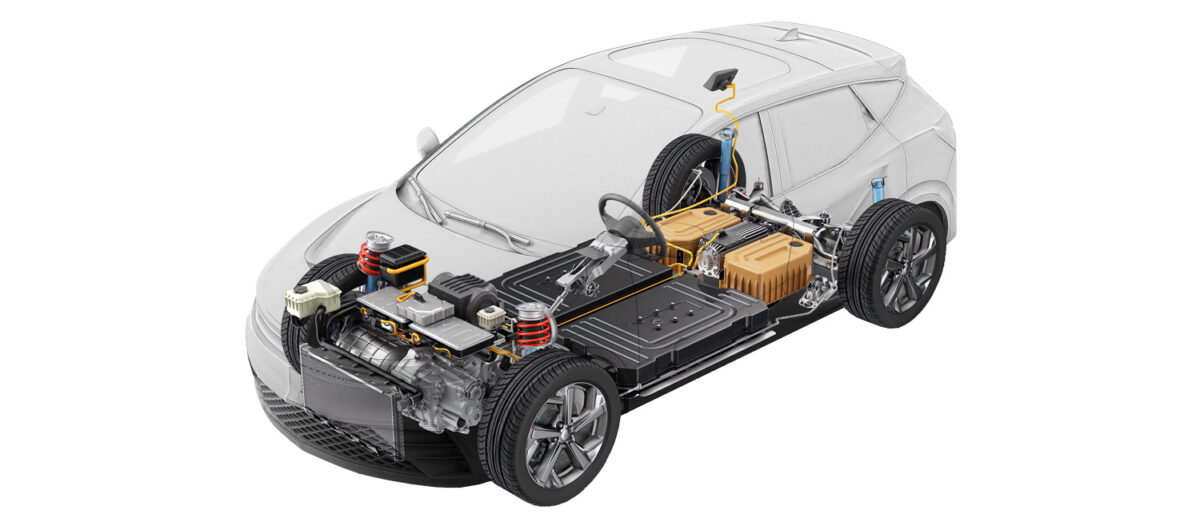
Electric vehicle (EV) powertrain development depends on understanding how torque, force, and temperature interact across motors, gear reduction stages, driveline components, and the wheel. Unlike traditional ICE architectures, EVs introduce higher rotational speeds, bidirectional torque flow, concentrated thermal loads, and electrically noisy environments, all of which place new demands on instrumentation.
Michigan Scientific supports EV programs by engineering measurement systems that perform reliably under real operating conditions. Rather than offering one-size-fits-all solutions, we design an instrumentation architecture that preserves component behavior while delivering high‑fidelity data wherever torque, force, or temperature must be understood.
Why EV Powertrain Measurement Is Different
While the fundamentals of torque and force measurement remain the same, EV powertrains introduce conditions that fundamentally change how instrumentation must be designed:
- Very high rotational speeds, often exceeding those seen in ICE applications
- High thermal density, particularly within motors and compact gearboxes
- Electromagnetic interference (EMI) from motors and inverters
- Heavier vehicles, resulting in increased force and torque on components
Successful EV instrumentation must account for all of these factors simultaneously, without altering stiffness, balance, or load paths that would compromise test validity.
A System‑Driven View of the EV Powertrain
Rather than focusing on individual components, effective EV testing captures how the entire system behaves under real use.
Michigan Scientific supports measurement across the full powertrain, including:
- Electric motor output torque and rotor temperature
- Gear reduction and gear tooth strain
- Bearing loads and thermal effects
- Driveshaft, axle, and downstream torque transmission
- Wheel forces and moments at the tire–road interface
This system‑level approach allows engineers to correlate data across components, identify loss mechanisms, and validate both physical designs and simulation models. This system-level approach also provides the physical data needed to develop and validate digital twin models of EV powertrain behavior.
Motor Torque and Temperature Measurement
Electric motors operate at high speeds and high power density, making direct measurement critical for performance, efficiency, and durability analysis.
Michigan Scientific instruments motor rotors to measure:
- Torque and strain under real electromagnetic loading
- Rotor, magnet, and lamination temperatures
- Thermal gradients that influence efficiency and bearing life
Thermocouples are often embedded during manufacturing of the rotor and routed through the rotor shaft to slip rings or telemetry systems. Proper planning can mitigate EMI and other instrumentation issues during the testing phase.
Both bench‑level motor testing and fully integrated on‑vehicle measurements are supported. Depending on speed, temperature, and test duration, data may be transmitted using high‑speed telemetry or instrumentation‑grade slip rings, selected to preserve signal integrity in electrically noisy environments.
Managing EMI and Signal Integrity in EV Environments
EV powertrains present some of the most challenging environments for strain‑based measurement. High electromagnetic fields can corrupt low‑level signals if instrumentation is not properly designed.
Michigan Scientific addresses these challenges through:
- Careful strain gauge selection and placement
- Shielded wiring and optimized routing
- Signal conditioning placed close to the measurement source
- Proven grounding and EMI rejection techniques
By mitigating noise at the source, measurement accuracy is preserved without relying on aggressive post‑processing corrections.
Gear Reduction, Bearing, and Driveline Instrumentation
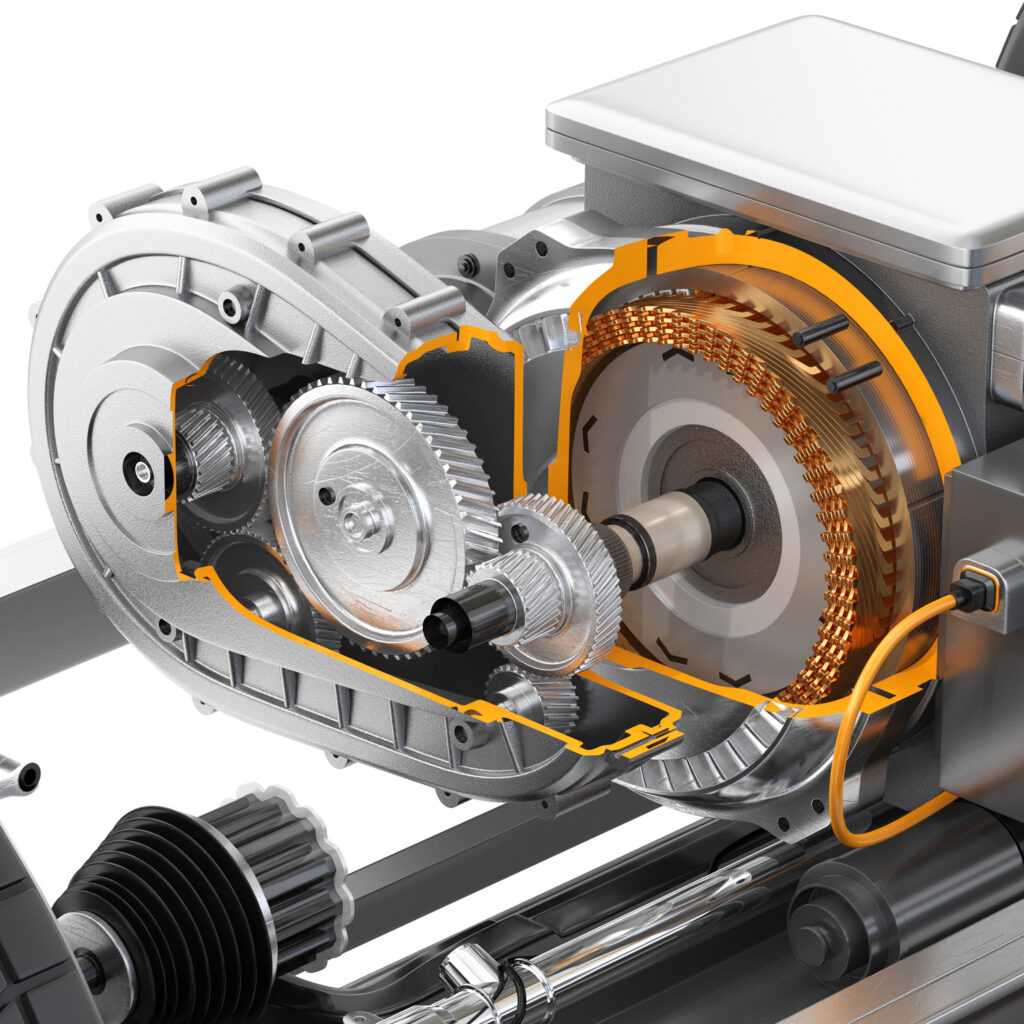
EV gear trains experience unique loading profiles, including high transient torque and elevated operating temperatures.
Michigan Scientific applies strain gauges directly to production gear and driveline components to measure:
- Gear torque and tooth strain
- Bearing strain and load distribution
- Thermal effects that influence alignment and durability
Instrumentation is designed to preserve real‑world stiffness and boundary conditions, ensuring that measured behavior reflects actual operating conditions—not artifacts introduced by the test setup.
Wheel Force Measurements and Power Delivery
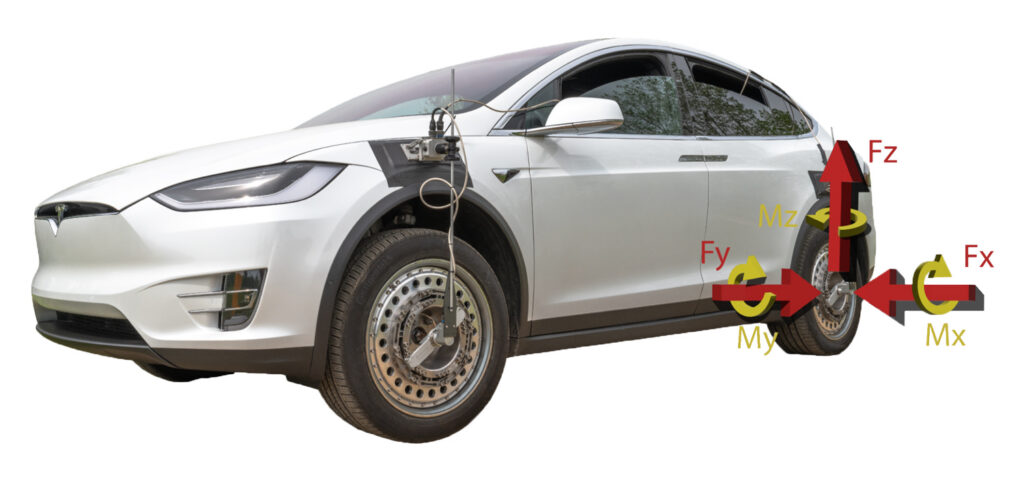
While torque is generated at the motor and transmitted through gear reduction and driveline components, power is ultimately delivered at the wheel–road interface. Measuring wheel torque provides the final mechanical output of the EV powertrain, capturing the cumulative effect of upstream losses under real operating conditions.
Wheel Force Transducers (WFTs) enable direct measurement of wheel torque, forces, and moments at the tire–road interface. When correlated with motor and drivetrain measurements, wheel data allows engineers to close the loop on power delivery, validate efficiency and simulation models, and evaluate how control strategies translate into real‑world vehicle performance.
From Physical Testing to Simulation Confidence
As EV development relies increasingly on virtual tools, high‑quality physical data becomes essential. Digital twin models become more valuable when simulation outputs are validated against high-fidelity, real-world measurements.
Direct measurements of torque, force, and temperature allow engineers to:
- Validate FEA and system‑level simulations
- Refine efficiency maps and thermal models
- Correlate bench testing with on‑road behavior
- Reduce uncertainty earlier in the development cycle
Accurate, synchronized measurements across multiple components help ensure that simulations remain grounded in reality.
Instrumentation Designed Around Your Challenge
Packaging, speed, temperature, channel count, test duration, and environment all influence instrumentation strategy.
Michigan Scientific works directly with engineering teams to design measurement systems that fit the application—whether instrumenting a single component on a test stand or deploying a fully integrated, multi‑channel system on a vehicle.
Contact Michigan Scientific to discuss an instrumentation strategy for your EV powertrain test program.