
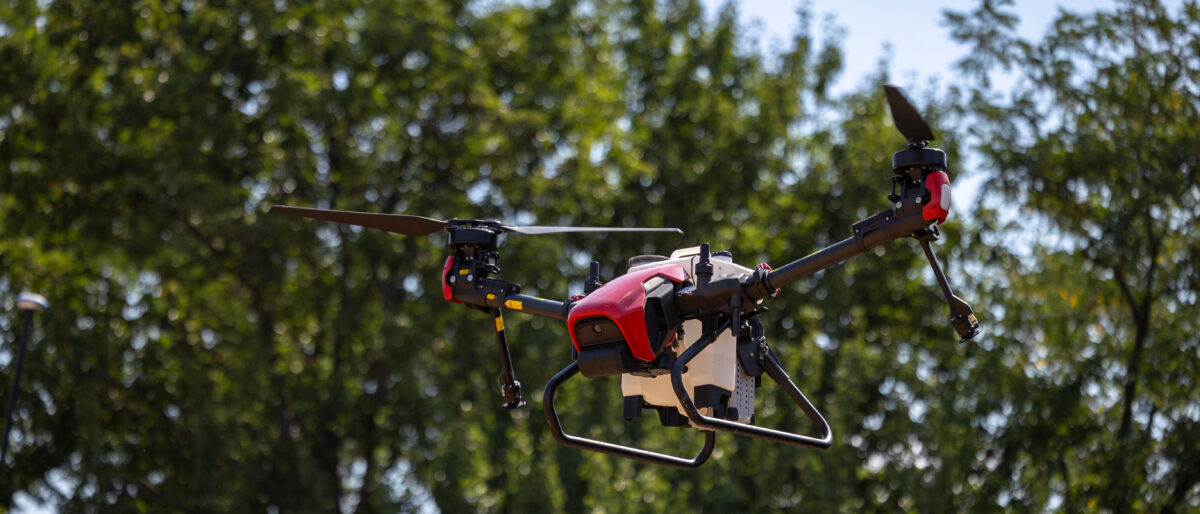
For many drone developers, failures do not happen in the air. They happen at the moment of release, during a hard landing, or near the brackets and mounts that transfer payload forces into the airframe. When those loads are unknown, unpredictable, or poorly measured, reliability suffers. This is why payload and landing-load testing have become one of the most critical areas of unmanned aerial vehicle (UAV) development.
Why Payload and Landing-Load Measurement Matters
Every payload interaction introduces a force path through the aircraft. Engineers need to know:
- How much force the payload bracket sees during flight
- What forces occur when a release mechanism opens
- How hard the landing gear impacts the ground
- Whether side loads or off-axis forces are overstressing mounts
- How repeated drops or landings contribute to fatigue
These are the root causes of many real-world failures such as cracked brackets, bent landing gear, payloads that detach prematurely, or release mechanisms that jam under load. Without accurate measurement, these issues remain hidden until they cause mission-critical downtime.
Measuring Payload Loads: What Engineers Need to Capture
Payload systems experience a combination of static, dynamic, and transient forces. To characterize them, engineers typically measure:
- Vertical load from payload weight and maneuvering
- Side loads of wind, acceleration, or uneven release
- Shock loads during drop or deployment
- Fatigue cycles from repeated missions
To capture these forces, custom load cells or strain-gage-based transducers are often integrated directly into the payload path. This allows engineers to measure the exact forces traveling through brackets, hooks, rails, or release mechanisms without altering the geometry or adding unnecessary mass.
These measurements reveal whether the payload system is over-designed, under-designed, or simply misunderstood.
Release-Mechanism Testing: Capturing the Moment that Matters
Payload release is one of the most failure-prone events in heavy lift drone operation. Engineers need to know:
- How much force is required to trigger the release
- Whether the mechanism binds under load
- How the aircraft reacts dynamically when the payload separates
- Whether off-axis forces cause partial or failed releases
Instrumented release mechanisms using miniature load cells or strain-gauged OEM components capture these forces with high resolution. This data helps engineers refine release timing, reduces mechanical friction, and ensures consistent operation across temperature, vibration, and payload variations.
Landing-Load Measurement: Understanding Touchdown Forces
Landing gear sees some of the highest loads on the entire aircraft. Hard landings, uneven terrain, and side-impact events can introduce forces far beyond what designers expect.
Landing-load testing typically measures:
- Peak touchdown force
- Side loads and torsional loads
- Impact duration and shock characteristics
- Fatigue accumulation over repeated landings
By instrumenting land legs, skids, or feet with strain gauges or custom load cells, engineers can quantify exactly how the heavy lift drone interacts with the ground. This data is essential for validating gear landing strength, improving damping, and preventing structural failures. Three-axis load cells can also be placed under each landing contact point in a test fixture to measure forces during touchdown.
How Michigan Scientific Supports Payload and Landing-Load Testing
Michigan Scientific provides the instrumentation and expertise needed to capture these complex forces with aerospace-grade accuracy. Our capabilities include:
- Custom gauging of payload brackets and release-path components
- Miniature or custom load cells that can be applied to compact UAV structures
- Multi-axis force/torque sensors capable of measuring landing-gear and payload-path measurement
- Instrumentation that preserves original geometry and weight constraints
Whether you’re validating a heavy-lift drone, refining a release mechanism, or diagnosing landing-gear failures, our solutions deliver the data engineers need to design safer, more reliable UAV systems.
Payload handling and landing events are among the most demanding mechanical challenges in UAV operation. By accurately measuring the forces involved during flight, at release, and upon touchdown engineers can eliminate guesswork, prevent failures, and build aircraft that perform reliably in real world missions.
For developers facing payload issues, bracket fatigue, hard-landing failures, or unknown impact loads, precise measurement is the key to solving the problem. Michigan Scientific provides the instrumentation that makes this possible.
Contact us today to discuss your application!