Instrumenting components at various stages within the system is crucial when running lab tests to help understand and prove vehicle dynamics. Michigan Scientific has extensive experience in helping companies instrument components and transfer signals for lab tests.
Overview
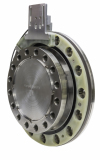
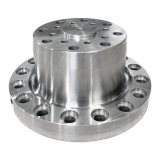
Michigan Scientific engineers are experts when it comes to understanding how to instrument automotive components for critical forces in dynamometer tests. We have experience in determining what data will be useful and can help guide customers in understanding what they need and why they need it. When you bring us a force measurement application, Michigan Scientific engineers will review your application with you to determine whether a standard Multi-Axis Load Cell can be used. If a standard load cell solution is possible, we will recommend which load cell model and mounting concepts will meet your project requirements. In addition to the load cell, we can quote the entire system design and provide all necessary mounting adapters. Our engineers also have expertise in gauging a wide variety of stock components. We develop and fabricate vehicle component strain gauge transducers that measure vehicle suspension forces, powertrain torques, steering component forces, engine and motor loads, and braking torques on vehicles in the field or in the lab.
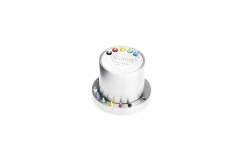
Because of their simplicity, slip ring assemblies are the first choice for making connections in rotating applications to strain gauges, thermocouples, ICP accelerometers, RTD’s and other sensors. As a dyno operates, a slip ring can transfer the signal from the rotating sensors. The slip ring can be connected directly to the thermocouple or strain gauge wires, or the wires can be first passed through an amplifier. Michigan Scientific has many options for amplifying signals and passing them directly to the slip ring. Our slip rings are a common, reliable way to make rotating thermocouple measurements in engine testing. The S-Series and SR-Series slip ring assemblies have many options for the number of channels, while the Short S-Series are a great option in applications where space is limited. They are simple to install and easy to use, with no maintenance needed.
Related Blog Posts